
Why Yahoo Finance Recommended Ledger as the Best Hardware Wallet

This content includes affiliate links for Ledger products. If you purchase through these links, we earn a commission at no extra cost to you. This is not financial advice. Cryptocurrency assets carry high risks, including the risk of losing your entire investment. Please do your own research and make decisions based on your personal risk tolerance.
In August 2026, Yahoo Finance published its guide to the best crypto wallets and selected Ledger as its best hardware wallet. That recommendation struck me because Yahoo Finance is a mainstream financial publication, not a specialist crypto website.
So why Ledger?
The answer isn't one flashy feature. Ledger offers a combination of security, ease of use, support for many cryptocurrencies and a mature ecosystem that makes self-custody more approachable.
Yahoo Finance Recommended Ledger as the Best Hardware Wallet: First, What Exactly Is a Hardware Wallet?
A hardware wallet is a physical device that protects the private keys controlling your cryptocurrency.
Your Bitcoin isn't actually stored inside the device. Bitcoin, Ethereum and other assets remain recorded on their respective blockchains.
The hardware wallet protects the keys that allow you to control those assets.
Think of it as a secure signing device.
When you want to send crypto, the transaction can be prepared on your computer or smartphone. The important approval happens using the hardware device. This provides an important layer of protection compared with keeping everything inside an internet-connected software wallet.
Yahoo Finance has previously highlighted the basic advantage of cold storage. Keeping private keys offline reduces exposure to hackers, malware and other online threats.
For someone planning to hold cryptocurrency for years, that difference can become very important.
Why Ledger Stood Out to Yahoo Finance
Ledger's biggest strength is balance. There are hardware wallets designed specifically for Bitcoin enthusiasts. Others focus on maximum simplicity. Some emphasize open-source software. Others concentrate on air-gapped operation.
Ledger takes a broader approach.
It tries to combine serious hardware security with a device ordinary crypto owners can actually use. That matters. Security isn't very useful if a product is so complicated that people make mistakes while using it.
Ledger devices use a Secure Element chip and Ledger's operating system to protect private keys. Ledger says its current devices share the same underlying security model, while individual models offer different screens, connectivity options and features.
The idea is simple.
Your computer can be connected to the internet. Your phone can run apps. Your Ledger remains the device responsible for protecting keys and approving transactions.
Ledger Supports a Huge Range of Digital Assets
Another reason Ledger works well as an overall recommendation is cryptocurrency support. Many investors don't own just Bitcoin. Someone might hold Bitcoin and Ethereum alongside Solana, Cardano, stablecoins, tokens and NFTs. Maintaining separate hardware devices for every blockchain would quickly become inconvenient.
Ledger says its current ecosystem can manage more than 15,000 coins, tokens and NFTs through Ledger Wallet and compatible third-party wallets.
That's a major practical advantage.
Instead of thinking about Ledger as simply a “Bitcoin wallet,” it makes more sense to think about it as a gateway for managing a broader digital asset portfolio.
This becomes even more relevant as blockchain technology expands beyond cryptocurrency.
Tokenized shares, bonds, real-world assets, stablecoins and digital identities could eventually sit alongside today's cryptocurrencies.
Hardware wallets may therefore have a much bigger job in the future.
The Software Matters Too
The physical device is only half the story. Ledger has built a wider ecosystem around its hardware.
Ledger Wallet, previously known as Ledger Live, allows users to manage assets and access features such as buying, selling, swapping and staking through supported services.
Ledger's newer software also supports direct connections to some decentralized applications. This makes self-custody less intimidating. You don't necessarily need one application for Bitcoin, another for Ethereum and another for checking your portfolio. More can be handled through a central interface.
That's important for mainstream adoption.
Most people don't want to become blockchain security experts. They want to check their assets, make a transaction and know that their private keys remain protected.
Bigger Screens Are More Important Than They Look
One of the most interesting developments in Ledger's newer devices is the move toward larger secure touchscreens. This might sound like a cosmetic upgrade.
It isn't.
Imagine approving a transaction containing a long address and complicated smart-contract information on a tiny display.
Now compare that with seeing important transaction details on a larger screen. Ledger calls its approach Clear Signing. The idea is to show understandable transaction information so users have a better chance of knowing what they're actually approving.
Ledger's newer Nano Gen5, Flex and Stax devices use secure touchscreens. The Nano Gen5 has a 2.8-inch E Ink display, Flex has a 2.8-inch E Ink touchscreen, while Stax uses a larger 3.7-inch curved E Ink display.
As crypto scams become more sophisticated, seeing what you're signing matters.
Five Ledger Hardware Wallets Worth Knowing
Ledger doesn't offer a single device for everyone. Its range now covers different budgets and types of users.
Ledger Stax
Ledger Stax is the premium choice.
It has a 3.7-inch curved E Ink touchscreen, Bluetooth, NFC and Qi wireless charging. It was designed with Tony Fadell, who is well known for his role in creating the iPod. The larger screen makes transaction information easier to read. The curved display also gives Stax a distinctive design compared with traditional USB-style hardware wallets.
Ledger positions Stax at the premium end of its range.
If you want Ledger's most refined hardware experience, Stax is the obvious model to consider.

Ledger Flex
Ledger Flex brings the touchscreen experience to a simpler format.
It uses a 2.8-inch E Ink secure touchscreen and supports USB-C, Bluetooth and NFC connectivity.
You get many of the benefits of Ledger's newer touchscreen approach without moving all the way to the premium Stax design.
For many people, Flex could represent the sweet spot between usability and premium features.

Ledger Nano Gen5
Ledger Nano Gen5 is the modern evolution of the classic Nano.
Released in October 2025, it replaced the tiny-screen experience with a 2.8-inch E Ink secure touchscreen.
It also includes Bluetooth, USB-C and NFC connectivity. Ledger designed it to support Clear Signing, Transaction Check and newer digital identity features.
It feels like the bridge between the classic Nano devices and Ledger's newer touchscreen generation.

Ledger Nano X
Ledger Nano X remains a practical choice for mobile users.
It has Bluetooth, USB-C connectivity and a rechargeable battery.
That means you can manage crypto using a smartphone without always needing to connect the device with a cable.
It doesn't offer the larger touchscreen experience of Ledger's latest models, but its portability and established track record continue to make it relevant.
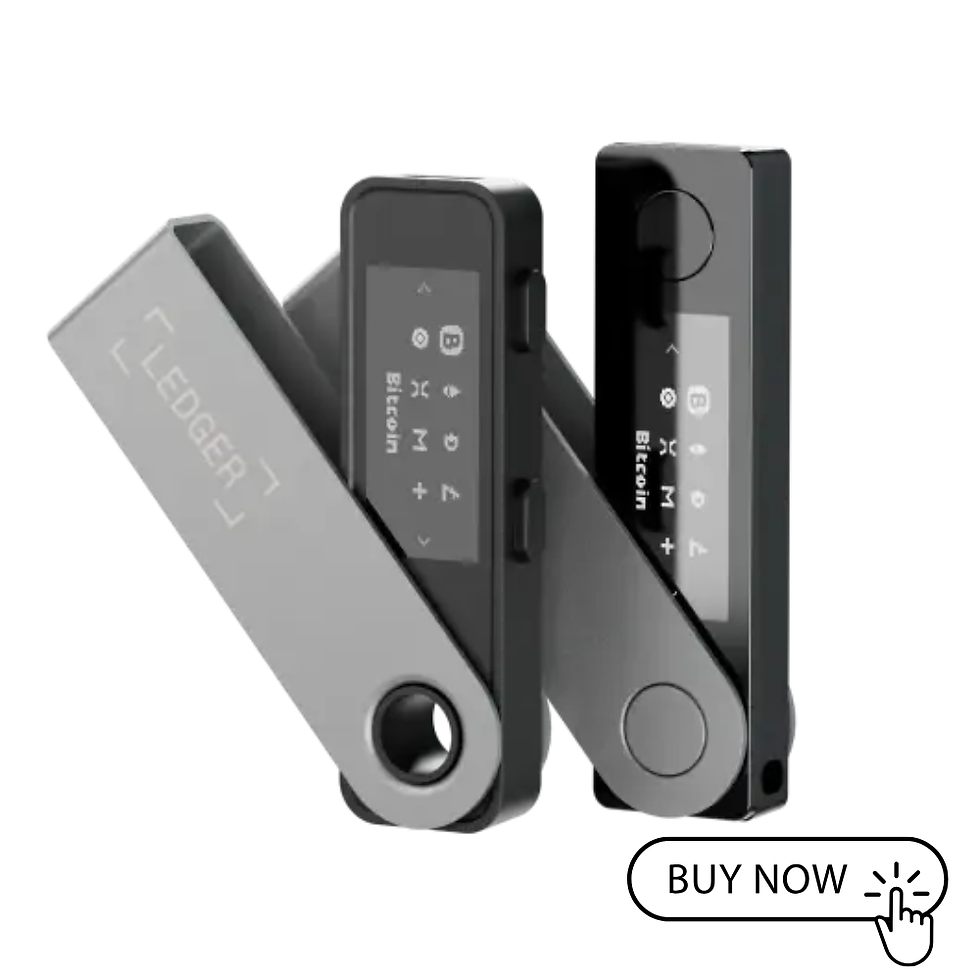
Ledger Nano S Plus
Ledger Nano S Plus keeps things simple.
There's no Bluetooth or battery. You connect it using USB-C.
That simplicity can actually be attractive.
Someone who primarily manages cryptocurrency from a computer might not need wireless connectivity or a touchscreen.
Ledger says the Nano S Plus supports more than 15,000 digital assets through Ledger Wallet and supported third-party wallets.
It's a straightforward way to enter the Ledger ecosystem without paying for features you may never use.
No Hardware Wallet Makes Crypto Risk-Free
Yahoo Finance recommending Ledger doesn't mean Ledger eliminates every danger.
No hardware wallet can protect someone from every mistake.
If you reveal your recovery phrase to a scammer, approve a malicious transaction or store your recovery information carelessly, your crypto can still be at risk.
Hardware wallets change the security model. They don't remove personal responsibility.
That's why good habits remain essential.
Never share your recovery phrase. Always verify transaction details on the hardware device itself. Buy hardware wallets from trustworthy sources. Be suspicious of emails or messages asking you to “verify” or “restore” your wallet.
The human being holding the device is still part of the security system.
Why Yahoo Finance's Recommendation Matters
There's a bigger story here than Ledger winning a category. Crypto hardware wallets are becoming mainstream financial products.
Yahoo Finance discussing self-custody alongside normal personal-finance topics shows how far the market has moved.
Hardware wallets were once strange little gadgets mainly understood by hardcore Bitcoin users.
Now we're talking about secure touchscreens, Bluetooth connectivity, smartphone apps, staking, stablecoins, NFTs and digital identity.
The hardware wallet is evolving. Today, it protects crypto keys.
Tomorrow, devices like Ledger could potentially help people control a much wider collection of digital property.
That could include cryptocurrencies, tokenized assets, digital identities and access credentials.
Yahoo Finance recommended Ledger as the Best Hardware Wallet: It makes sense because Ledger doesn't depend on one advantage. It combines hardware-based security with broad cryptocurrency support, established software and a range of devices designed for different users.
Want the premium experience? Ledger Stax. Want a modern touchscreen without going all the way to Stax? Ledger Flex. Want the new generation of the familiar Nano concept? Ledger Nano Gen5. Want Bluetooth and a proven portable design? Ledger Nano X. Want straightforward hardware security with USB-C? Ledger Nano S Plus.
The best choice ultimately depends on how you use crypto. But the bigger message from Yahoo Finance is worth paying attention to. Self-custody is becoming easier to understand and easier to use. Hardware wallets are moving from specialist crypto equipment toward everyday financial security tools.
And if crypto becomes a larger part of our financial lives, protecting the keys that control those assets could become just as normal as protecting the money in our bank accounts.


Comments