
Cold Storage for AI Agent Operators

Imagine waking up to discover that your AI agent made thousands of dollars overnight. It negotiated contracts, traded digital assets, paid for APIs, and collected customer payments while you slept. Then you notice something else.
Every wallet it controlled has been emptied.
The AI itself wasn't hacked. Your server wasn't compromised. Instead, someone gained access to the wallet's private keys. For anyone running AI agents, this is becoming one of the biggest security risks. As autonomous software begins handling cryptocurrencies, stablecoins, NFTs, and blockchain identities, protecting digital assets becomes just as important as building the agent itself.
Cold storage is no longer just for crypto investors. It is becoming an essential tool for AI agent operators.
Cold Storage for AI Agent Operators: Why AI Agents Need Secure Wallets
Modern AI agents are no longer simple chatbots.
Many can:
Pay for online services
Purchase digital goods
Interact with smart contracts
Receive cryptocurrency payments
Manage decentralized identities
Execute automated transactions
Every one of these actions requires access to a wallet. A cryptocurrency wallet does not actually store coins. Instead, it stores private keys that prove ownership of blockchain assets. Anyone who obtains those keys controls the funds.
That is why protecting them is critical.
The Biggest Risk Isn't the AI
Many people assume hackers will attack the AI model itself. In reality, attackers usually look for the easiest target. That target is often the wallet.
If your wallet's private keys are stored on:
Your laptop
A cloud server
A VPS
An online browser wallet
An API server
They could potentially be stolen through malware, phishing, remote exploits, or insider attacks. Even if your AI software is perfectly designed, exposed private keys can undo all your hard work in seconds.
What Is Cold Storage?
Cold storage means keeping your wallet's private keys completely offline. Instead of storing sensitive information on an internet-connected computer, the keys remain inside a dedicated hardware device. Transactions are signed inside the device itself. The private keys never leave it. Even if your computer becomes infected with malware, the attacker cannot simply copy your wallet keys.
This dramatically reduces your attack surface.
Hot Wallets Versus Cold Wallets
Think of a hot wallet like carrying cash in your pocket. It is convenient. You can spend it anytime. But if someone steals your wallet, the money is gone. Cold storage is more like keeping your savings inside a secure bank vault. Access takes a little longer. However, your assets are much better protected. For AI operators, both have their place. A small hot wallet can fund daily operations.
A cold wallet should protect larger reserves.
A Practical Security Strategy
Instead of putting every digital asset into one wallet, many experienced operators separate their funds.
For example:
Operational wallet
Used by the AI for routine payments, subscriptions, and transaction fees.
Only enough funds are kept here for daily activity.
Treasury wallet
Stores larger holdings offline. Funds are transferred only when necessary. If the operational wallet is compromised, the majority of your assets remain safe. This simple approach limits potential losses.
Cold Storage Is More Than Crypto
Many AI developers focus only on cryptocurrencies. The future is much broader.
AI agents may soon control:
Tokenized assets
Stablecoins
Digital identities
Domain names
DAO memberships
Software licenses
Access credentials
Intellectual property records
These digital assets may become just as valuable as cryptocurrencies. Protecting them requires the same careful approach.
Common Security Mistakes
Many AI operators unknowingly create unnecessary risks.
Some common mistakes include:
Saving seed phrases in cloud storage
Taking screenshots of recovery phrases
Keeping wallet backups inside email accounts
Using the same wallet for testing and production
Sharing wallet access across multiple team members
Leaving large balances in browser wallets
These shortcuts save a few minutes today but can become expensive later.
A good security strategy assumes that computers connected to the internet will eventually be attacked.
The goal is to make sure your most valuable assets remain protected even if that happens.
Choosing the Right Hardware Wallet
Not every AI operator has the same needs. Some manage a personal AI assistant, while others operate fleets of autonomous agents handling significant amounts of digital assets. Fortunately, Ledger offers several hardware wallets that suit different workflows.
Ledger Stax
If you want a premium experience, Ledger Stax is an excellent choice.
Its large curved E Ink touchscreen makes reviewing transaction details much easier than using small displays. As AI agents become more capable, verifying exactly what you're approving becomes increasingly important.
Ledger Stax also supports wireless charging and Bluetooth connectivity, making it convenient for people who regularly manage multiple wallets while maintaining strong security.
For AI entrepreneurs managing substantial digital assets, Ledger Stax offers both security and ease of use.

Ledger Flex
Ledger Flex combines modern usability with trusted hardware security.
Its touchscreen simplifies wallet management, making it easier to review addresses, approve transactions, and organize digital assets without feeling overwhelmed. If you frequently interact with decentralized applications, tokenized assets, or AI-related blockchain projects, Ledger Flex provides an intuitive experience while keeping private keys safely offline.
It is an excellent balance between convenience and protection.

Ledger Nano Gen5
Ledger Nano Gen5 represents the next generation of hardware wallet security.
As AI agents continue evolving, digital assets will likely become more complex. Future-ready hardware is becoming increasingly valuable.
Ledger Nano Gen5 is designed for users who want advanced protection while remaining compatible with an expanding blockchain ecosystem. For developers building long-term AI infrastructure, investing in newer security hardware can provide greater confidence as technology evolves.

Ledger Nano X
Ledger Nano X remains one of the most popular hardware wallets in the crypto community.
Its Bluetooth capability allows secure management from compatible mobile devices without sacrificing protection.
For AI operators who travel frequently or need to monitor their digital assets away from their desks, Ledger Nano X offers flexibility without exposing private keys to the internet.
It supports thousands of cryptocurrencies and digital assets, making it suitable for diverse AI-powered ecosystems.
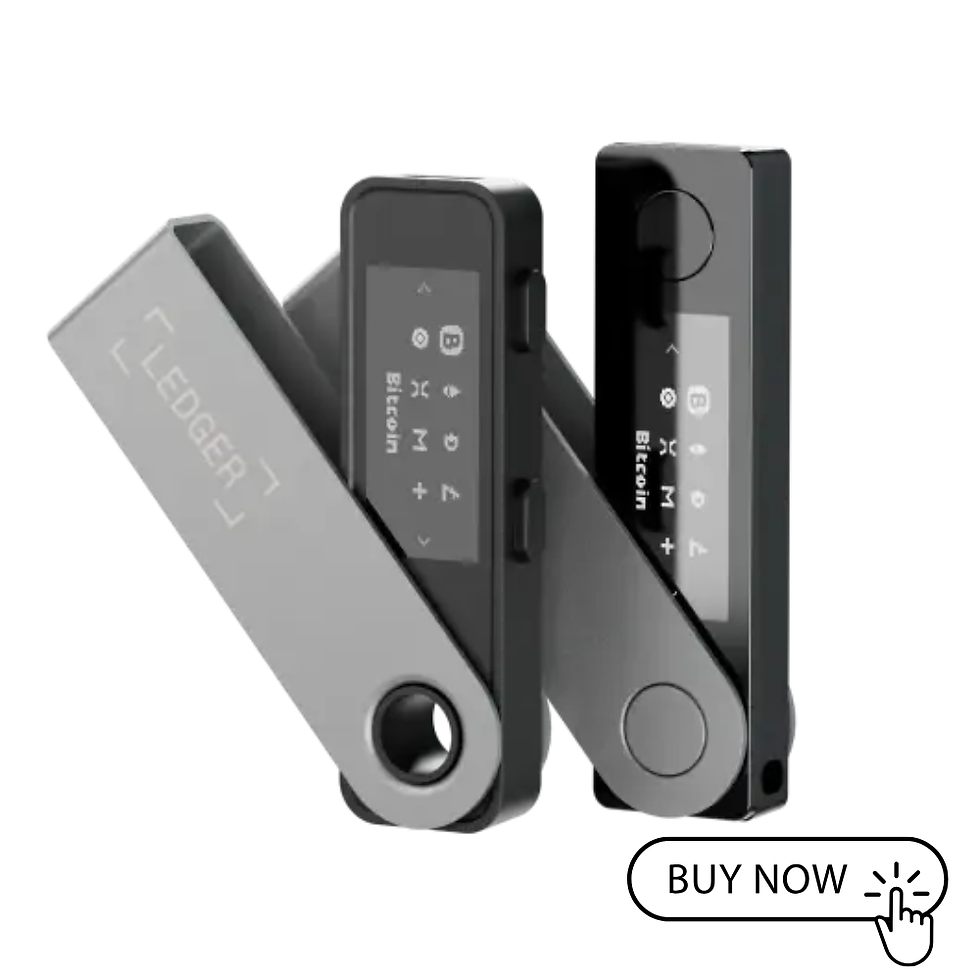
Ledger Nano S Plus
Ledger Nano S Plus delivers excellent value for users who want dependable cold storage without paying for premium features.
It supports a wide range of cryptocurrencies while providing the same core security model trusted across Ledger's product lineup.
For new AI developers or hobbyists experimenting with blockchain automation, Ledger Nano S Plus is an affordable way to begin building good security habits from day one.
Best Practices for AI Agent Security
Buying a hardware wallet is only one part of protecting your digital assets.
Follow these habits to strengthen your overall security:
Store your recovery phrase completely offline.
Never upload your seed phrase to cloud storage.
Never share recovery words with anyone.
Use strong passwords on every connected device.
Enable two-factor authentication wherever possible.
Keep firmware updated using official Ledger software.
Test your wallet recovery process before storing significant assets.
Separate operational wallets from long-term holdings.
Regularly review wallet permissions granted to decentralized applications.
Treat your hardware wallet as seriously as your passport or house keys.
Good security is built from many small habits rather than a single product.
Preparing for the Future of Autonomous Finance
AI agents are expected to become increasingly independent over the next decade.
Instead of simply answering questions, they may negotiate contracts, purchase computing resources, pay suppliers, manage subscriptions, invest capital, and coordinate with other autonomous agents.
Every one of these activities depends on secure digital ownership. As digital economies expand, protecting cryptographic keys may become as routine as protecting bank accounts today.
Cold storage provides a strong foundation for that future.
Cold Storage for AI Agent Operators: The smarter AI becomes, the more valuable its wallet becomes. Most successful cyber attacks do not involve sophisticated artificial intelligence. They exploit weak passwords, exposed private keys, phishing attacks, or poor operational security.
Cold storage removes one of the easiest paths for attackers.
Whether you're running a personal AI assistant, building autonomous trading systems, operating AI-powered businesses, or experimenting with decentralized applications, protecting your digital assets should be part of your plan from the beginning.
Ledger Stax, Ledger Flex, Ledger Nano Gen5, Ledger Nano X, and Ledger Nano S Plus each provide trusted hardware security for different types of users. The right choice depends on your budget, workflow, and the amount of digital assets you manage.
Your AI may be autonomous. Your security should be intentional. As AI agents become more capable, cold storage is no longer just a recommendation. It is one of the smartest investments you can make to protect the digital wealth your AI helps create.


Comments