
The D'CENT Wallet Hack: Why a Cold Wallet Is the Only Way to Truly Own Your Crypto

This content includes affiliate links for Ledger products. If you purchase through these links, we earn a commission at no extra cost to you. This is not financial advice. Cryptocurrency assets carry high risks, including the risk of losing your entire investment. Please do your own research and make decisions based on your personal risk tolerance.
I used to keep a spare house key under the flowerpot by my front door. I thought I was being clever. Everyone forgets their keys sometimes, right? Then one afternoon I came home and my neighbor, a sweet older lady, said, "I saw a man near your door last week. He was looking at your flowerpot."
Nothing was stolen. I got lucky. But I stood there feeling sick, because I finally understood something. The key wasn't hidden. It was just easy to reach. And anything that's easy for you to reach is easy for someone else too.
I thought about that flowerpot a lot this month, because of what happened to thousands of people using the D'CENT App Wallet.
The D'CENT Wallet Hack: Why a Cold Wallet Is the Only Way to Truly Own Your Crypto - What Actually Happened
Starting on September 15, 2026, XRP began quietly vanishing from D'CENT App Wallet accounts. In the first wave, attackers emptied more than 1,500 wallets in about two hours, using automated software. Then it kept going for days.
The exact numbers depend on who you ask. Reports put the total somewhere between roughly 9 and 12 million XRP, taken from around 6,000 to 7,400 wallets. Either way, it's a huge amount of money leaving thousands of ordinary people's pockets. Much of it was reportedly swapped and moved through other networks so it would be hard to trace.
The cause was a flaw in older versions of D'CENT's mobile app (versions before 8.1.0). Reports say it let attackers get hold of users' recovery phrases or keys. D'CENT hasn't fully explained how it happened, and it says it's working with law enforcement to trace the stolen funds.
Here's the part that matters most: D'CENT says the problem was in the app, not its hardware wallet devices. The people who lost money were the ones whose keys lived inside software on a phone.
Some of the victims had a hardware wallet too. But if they had typed the same recovery phrase into the app, that phrase was exposed. The hardware label didn't protect them, because the secret was already out.
Hot Wallets vs. Cold Wallets, in Plain English
A hot wallet is any crypto wallet that lives on a device connected to the internet, like an app on your phone or a browser extension. It's convenient. It's also like keeping your spare key under the flowerpot. It's always "out there," and if someone finds a weakness, they can get in.
A cold wallet is a small physical device that keeps your secret keys offline. When you want to send crypto, the device signs the transaction inside itself, and only the finished, signed result leaves it. Your private keys never touch your phone or computer.
Think of it like this. A hot wallet is a key you carry around and sometimes hand to strangers to hold. A cold wallet is a safe that never opens outside your own hands.
Why This Is So Critical
Here's what the D'CENT story teaches, and why I'd tell any friend to take it seriously.
1. Crypto has no undo button. If your bank card gets stolen, you call the bank and they can reverse charges. Crypto doesn't work that way. Once your coins are gone, they're gone. That means prevention is the only protection you get.
2. You can do everything right and still lose. Many of these victims probably weren't careless. They used a real app from a real company. The weakness was inside the software itself, where they couldn't see it. With a hot wallet, you're trusting every line of code you'll never read.
3. Attackers work like factories. This wasn't someone breaking into one wallet by hand. It was automated, hitting thousands of wallets in hours. When keys are exposed, the theft happens faster than you can react.
4. Your recovery phrase is everything. That list of 12 or 24 words is your money. Anyone who has it can take your funds from anywhere in the world. A cold wallet is built to keep that phrase away from the internet, where thieves can reach it.
5. Reusing your phrase spreads the risk. If you've ever typed your recovery phrase into an app "just to check something," you've made a copy in a place you can't fully trust. Your phrase should be entered on your hardware device, never on a phone screen.
I want to be honest about one thing. A cold wallet is not magic. It won't save you if you get tricked into handing over your phrase, or if you buy a device from a shady seller. But it removes the biggest risk of all: your keys sitting on an internet-connected device, waiting for the next bug.
Which Ledger Device Is Right for You?
If you decide it's time to move your crypto to cold storage, Ledger is one of the best-known names in the game. Their devices keep your keys inside a secure chip, and you approve every transaction on the device itself. Here's a simple rundown of five of them. Specs and prices change, so check Ledger's official site for the latest details.
Ledger Nano S Plus. This is the simple starter option. It plugs in by cable, has no Bluetooth, and usually costs the least. If you just want to secure your coins without extra features, start here.
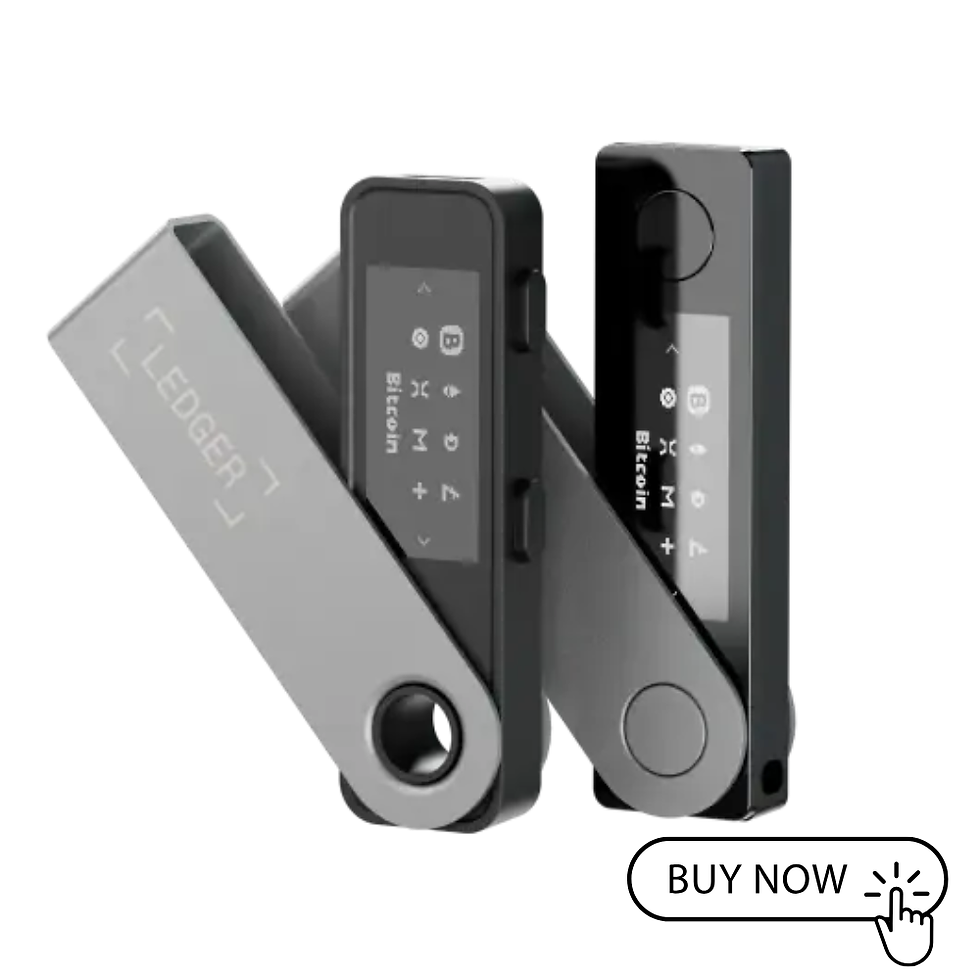
Ledger Nano X. Same pocket-friendly shape, but with Bluetooth and a built-in battery. That means you can manage your crypto from your phone without plugging in. Good for people who are always on the move.
Ledger Nano Gen5. The newer generation of the compact Nano line, with a touchscreen and Bluetooth. If you like small and portable but want something more modern than the older Nanos, this is the one to look at.

Ledger Flex. A bigger touchscreen makes reading and confirming transactions much easier on the eyes. It's a nice middle ground for anyone who wants a comfortable screen without going to the top of the range.

Ledger Stax. The premium pick. It's shaped like an oversized card, with a large curved screen and a design that looks more like a gadget from the future than a security device. If you're holding a lot of crypto, or you just love good design, Stax is the showpiece.

Not sure which to pick? Here's my shortcut. Tight budget or first-timer: Nano S Plus. Always on your phone: Nano X or Nano Gen5. Want a bigger screen: Flex. Want the best of everything: Stax.
Whichever you choose, buy directly from Ledger or an authorized reseller. Never buy a used or "discounted" device from a random seller, and never use one that arrives with a pre-written recovery phrase or a damaged package.
Simple Habits That Keep You Safe
Once you have a cold wallet, a few easy habits go a long way:
Write your recovery phrase on paper (or metal) and store it somewhere safe and private. Never take a photo of it or type it into a phone.
Never enter your phrase into any app, website, or "support chat." Real support will never ask for it.
Keep a small amount in a hot wallet for daily use, and the rest in cold storage. Think of it as pocket money versus savings.
Update your device's software only through the official app.
Be wary of anyone offering "help" after a hack. Scammers love to prey on people who've just lost money.
The Flowerpot Lesson
The D'CENT Wallet Hack: Why a Cold Wallet Is the Only Way to Truly Own Your Crypto - I threw out that flowerpot key a long time ago. Now I give a spare to a friend I trust, and I keep the real ones close.
The D'CENT hack is a painful reminder that "convenient" and "safe" are often different things. If you hold crypto that you'd be upset to lose, it deserves better than a hiding place that anyone with the right tool can find.
You wouldn't leave your savings under a flowerpot. Don't leave your keys in an app either. Move them somewhere they can't be reached, and sleep a lot better.


Comments