
Binance Hack 2026: Why a Cold Wallet Is the Safest Place for Your Crypto

This content includes affiliate links for Ledger products. If you purchase through these links, we earn a commission at no extra cost to you. This is not financial advice. Cryptocurrency assets carry high risks, including the risk of losing your entire investment. Please do your own research and make decisions based on your personal risk tolerance.
A few years ago, my friend Daniel called me at 7 a.m. He sounded like he hadn't slept.
"Withdrawals are paused," he said.
Everything he'd saved for a house deposit was sitting in crypto on that exchange. Not a fortune, but real money, the kind you think about every day. For nine days he refreshed the page like he could make it work by staring harder. The money did come back in the end. But he said something I've never forgotten: "The worst part wasn't the risk. It was realizing I never actually had it in my hands."
That afternoon I logged into my own exchange account, felt my stomach drop, and moved my coins onto a small device about the size of a car key. It took twenty minutes.
I've slept better ever since.
For the past few days, I kept thinking about Daniel, because of what happened at Binance.
Binance Hack 2026: Why a Cold Wallet Is the Safest Place for Your Crypto. So what actually happened?
Binance, the world's biggest crypto exchange, said this week that about $6.3 billion in client assets was affected by a security breach. That makes it the largest crypto theft ever recorded. The old record was the $1.5 billion Bybit hack in 2025.
The starting point sounds almost boring. Early findings point to one engineer's compromised laptop, which gave the attacker a way in to make withdrawals nobody approved. No movie-style super-hack. One laptop.
Security firms TRM Labs and Chainalysis have linked the attack to a North Korean state-backed group called TraderTraitor. That's their assessment, not a courtroom verdict, but it matches earlier big heists.
Binance paused deposits and withdrawals, says about $3 billion has been frozen so far, and promises to cover all losses from its user-protection fund. Some analysts say Binance itself doesn't look to be in danger of collapsing. All good news. But it isn't the whole story.
The part that should bother you
Even in the best case, where Binance makes everybody whole, think about what regular users went through. Their access stopped overnight. They couldn't sell, move, or do anything while the company worked out what happened.
That's the real lesson. When your crypto sits on an exchange, you don't hold crypto. You hold an IOU: a number on a screen saying the company owes you that amount. You're trusting their security, their staff's laptops, their decisions, and their ability to pay up.
Most days, that works fine. On the day it doesn't, you're just watching.
And to be fair to Binance, promising to cover losses is a good sign. Plenty of exchanges over the years have never given people their money back.
What's a cold wallet, in plain English?
A cold wallet is a small gadget that keeps the secret keys to your crypto offline, on a chip inside the device.
Think of it like the difference between money in a bank and cash in a safe at home. The exchange is the bank. The cold wallet is your safe.
When you want to send crypto, the device shows you the details on its own screen. You check them, press a button, and only then does the transaction go through. Even if your computer is crawling with malware, a hacker can't press that button in your hand.
Remember how this whole thing started? One infected laptop. With a cold wallet, one infected laptop isn't enough.
"But isn't that complicated?"
I thought so too. It isn't. Setup goes like this: turn the device on, choose a PIN, and write 24 words on the paper card it gives you. That's your recovery phrase.
Those 24 words are the master key to everything. Never take a photo of them, never type them into a computer, never send them to anyone. Anyone who asks for them, even someone claiming to be "support," is a scammer. Keep the paper somewhere safe, like a fireproof box or a hiding spot only you know about.
That's the "hard part." Everything after is just tapping around an app.
Which Ledger should you pick?
Ledger is the best-known name in this space, and it makes several devices. Here's how I'd explain the five main ones without handing you a spec sheet. Prices are rough, from when I checked, so look at Ledger's site for today's numbers.
Ledger Stax The premium pick. A big, curved E Ink touchscreen, Bluetooth, and wireless charging. If you hold a serious amount, or just like nice things, this is the one you'll enjoy using.

Ledger Flex A great pick if you hold a decent amount. A roomy E Ink touchscreen and Bluetooth, but a friendlier price than the Stax. Reading transaction details on a bigger screen is a real comfort.

Ledger Nano Gen5 The newest of the Nano line. It has a bigger E Ink touchscreen than older Nanos, Bluetooth, and Ledger's latest security upgrades. Good if you want something pocket-sized but modern.

Ledger Nano X A classic. Small, with Bluetooth so you can connect it to your phone. The screen is small and not touch, and the battery can wear down over time, so it suits people who use it now and then.
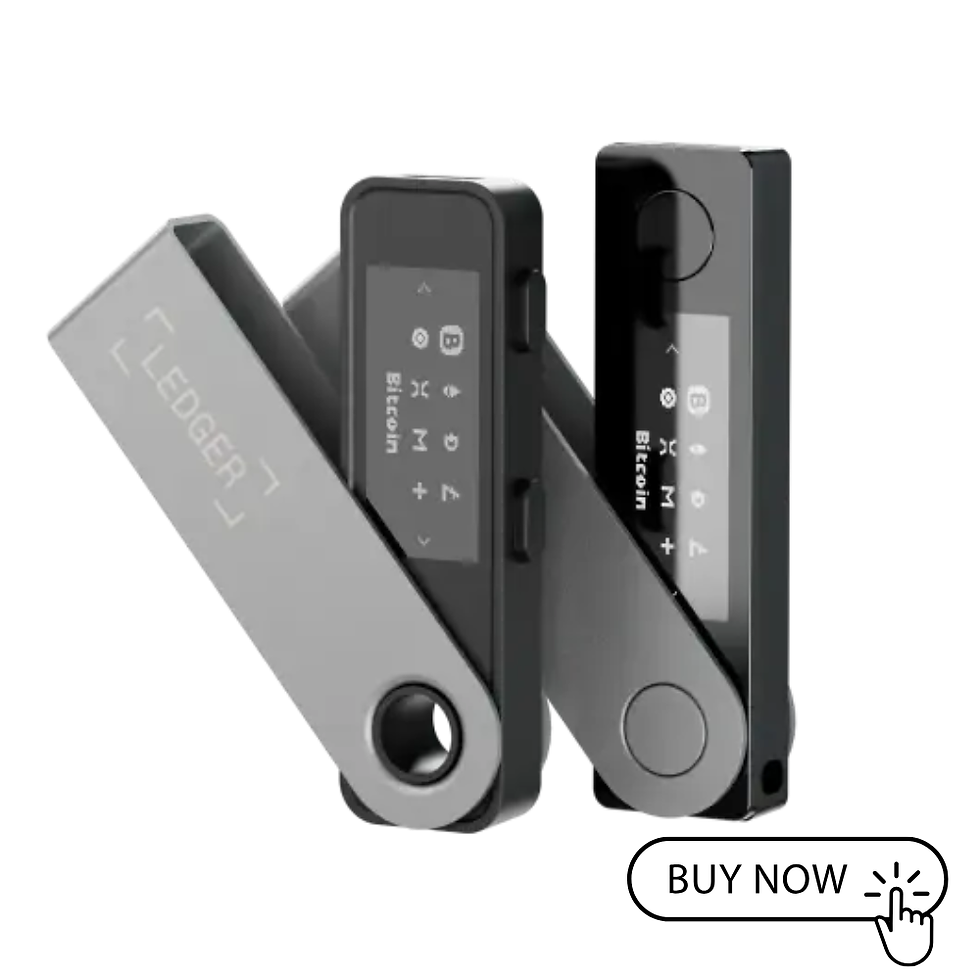
Ledger Nano S Plus The cheapest way in. No Bluetooth, no battery: you plug it into your computer or phone with a cable. It's what I'd tell a first-timer with a modest amount of crypto to buy. A cheap device that protects your keys beats an expensive plan you never get around to.
A quick rule of thumb: starting out, go Nano S Plus. Want phone convenience, look at the Nano X or Nano Gen5. Want the nicest screen and hold a lot, look at the Flex or Stax.
Compare Ledger Stax, Flex, Nano Gen5, Nano X and Nano S Plus on the official page.
A few simple rules so your cold wallet stays cold
Buy straight from Ledger or an official reseller. Never from a stranger or a used listing.
Never share your 24 words. Ever.
Write them on paper, not in your phone or notes app.
Send a small test amount first if you're nervous.
Keep a little on an exchange if you trade often, but keep long-term savings in your own hands.
The takeaway
Binance Hack 2026: Why a Cold Wallet Is the Safest Place for Your Crypto: I don't want to scare you off exchanges. They're handy for buying and selling, and Binance says it will make users whole. But this week's news is a reminder of what Daniel learned the hard way: crypto is only really yours when you hold the keys.
A cold wallet doesn't make you immune to mistakes. Lose your 24 words and they're gone for good. But it takes away the risk of someone else's laptop being the weak link in your savings.
If you've got crypto you plan to hold for months or years, move it somewhere only you control. Do it this weekend. Twenty minutes now beats nine days of refreshing a page.


Comments