
Seedless Cold Wallets: Why Convenience Can Cost You Control

Updated: May 8
This content includes affiliate links for Ledger products. If you purchase through these links, we earn a commission at no extra cost to you. This is not financial advice. Cryptocurrency assets carry high risks, including the risk of losing your entire investment. Please do your own research and make decisions based on your personal risk tolerance.
Seedless cold wallets feel like the future of crypto. No more writing down 24 words. No more worrying about losing a scrap of paper. Just log in, recover, and move on.
It sounds perfect.
But once you look past the convenience, a different picture emerges.
What is a seedless cold wallet?
A seedless wallet removes the traditional recovery phrase, the 12 or 24 words that give you full access to your crypto.
Instead, it replaces that with systems like:
Multi-party computation (MPC)
Social recovery
Cloud backups
Device-based authentication
The idea is simple. Make crypto easier to use. And it works, especially for beginners.
But there’s a trade-off.
Seedless Cold Wallets: Why Convenience Can Cost You Control - A hidden trade-off
The original design of crypto wallets is built around a single idea. You hold the key, you own the funds. A seed phrase is portable, independent, and works anywhere. You can restore your wallet on any compatible device without asking anyone for permission. Seedless wallets change that model.
Now your access depends on systems working correctly. Sometimes that includes:
A company’s servers
Your email or phone
A recovery process you don’t fully control
So instead of full independence, you get partial dependence. It may not feel like a big deal at first, but it matters when things go wrong.
1. Recovery is no longer universal
With a seed phrase, recovery is simple. Enter your words on any wallet. Done. Seedless wallets don’t work that way.
Recovery depends on:
Specific apps
Trusted devices
Identity checks or third-party systems
If any part fails, recovery becomes uncertain. In some cases, if your device is lost and recovery fails, your funds can be gone forever
That’s a serious risk.
2. You introduce new failure points
Seedless wallets remove one problem, the seed phrase. But they introduce many others.
Now you rely on:
Software updates
Backend infrastructure
Authentication systems
Each layer adds complexity. And complexity creates more ways for things to break. Even well-designed systems can fail over time.
3. You’re trusting providers again
Crypto was built to remove middlemen. Seedless wallets quietly bring them back. Many seedless designs require some level of trust, whether in cloud storage, smart contracts, or service providers.
That means:
If the provider shuts down, you may lose access
If their system is hacked, your recovery path could be compromised
If policies change, you’re affected
This is called vendor lock-in. Without a seed phrase, switching wallets becomes harder, sometimes impossible.
4. Device becomes a single point of failure
With traditional wallets, your device doesn’t matter. Lose it, replace it, recover with your seed phrase. With seedless wallets, the device becomes critical. If it breaks or disappears, recovery depends entirely on backup systems. In some designs, the device itself is the key.
Lose it, lose everything.
5. Less transparency, more confusion
Seed phrase wallets are simple. One secret. One responsibility. Seedless wallets are harder to understand.
Even experienced users may not fully grasp:
How keys are split
Where they are stored
What happens during recovery
This lack of clarity can lead to mistakes. And in crypto, mistakes are usually permanent.
6. Privacy trade-offs you might not expect
Some seedless recovery systems involve identity verification.
That means linking your wallet to:
Personal data
Email accounts
Devices
This creates potential privacy risks. Off-chain systems can expose metadata or link your identity to transactions if not handled carefully
That goes against the privacy-first mindset many crypto users value.
7. Social recovery isn’t foolproof
Some seedless wallets use “guardians” like friends or devices. Sounds safe. But think about it.
What if:
A guardian loses access
Devices get compromised
Multiple guardians are tricked or hacked
In certain cases, attackers don’t need your password. They just need your recovery network.
Why people still choose seedless wallets
To be fair, seedless wallets exist for a reason. Seed phrases are hard. People lose them. Misplace them. Store them carelessly. Even today, millions of users struggle with managing that responsibility. Seedless wallets aim to solve that.
They make crypto feel like:
Logging into an app
Recovering an account
Using something familiar
For beginners, that’s a big win.
The better approach: control with smarter tools
Instead of removing the seed phrase entirely, many experienced users prefer improving how they manage it. That’s where hardware wallets come in.
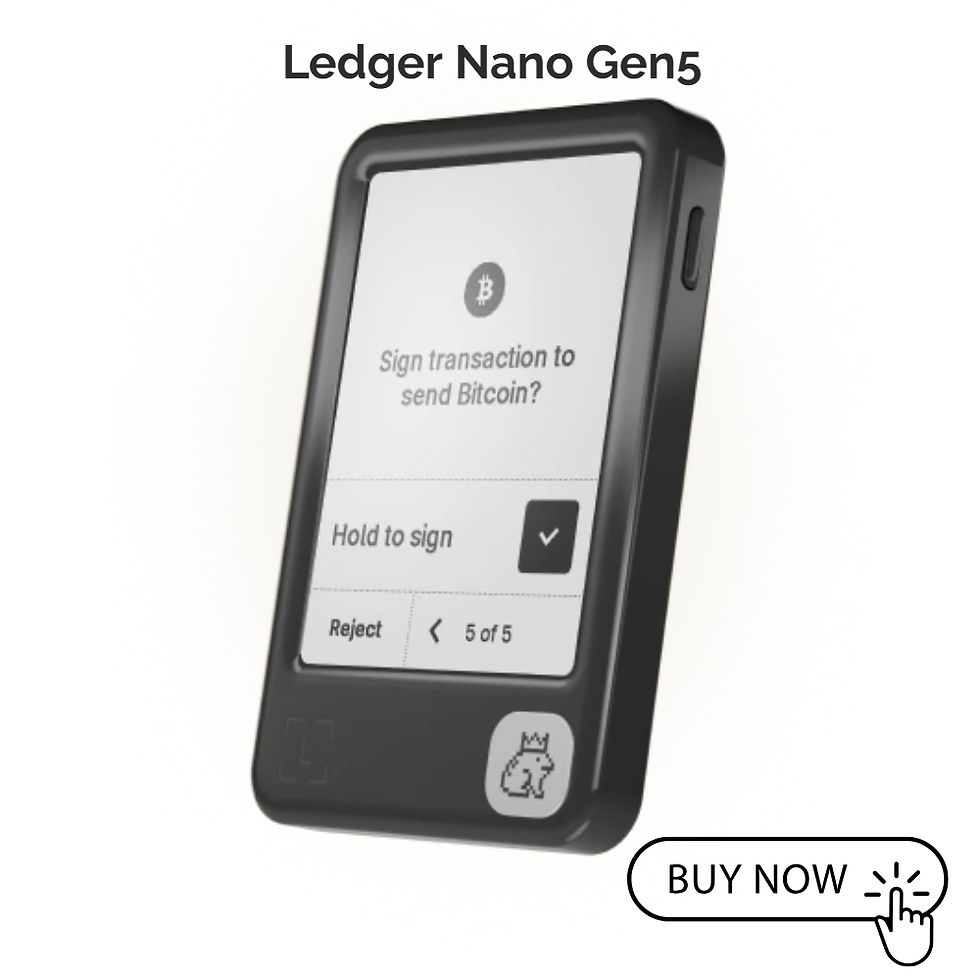
Devices like Ledger Stax, Ledger Flex, Ledger Nano X, Ledger Nano S Plus, and the newer Ledger Nano Gen5 keep your private keys offline while still giving you full control.
Here’s how they differ:
Ledger Stax
Designed with a larger screen and a more intuitive experience. Great if you want something modern and easy to use without sacrificing control.

Ledger Flex
Built for flexibility and everyday usability. It balances security with a smoother, more mobile-friendly experience.

Ledger Nano Gen5
The latest generation, focused on stronger security architecture and future-proof design.
Ledger Nano X
A popular choice. Bluetooth enabled, portable, and ideal if you manage crypto on the go.

Ledger Nano S Plus
Simple, affordable, and reliable. A solid entry point for long-term holders.
What all of them share:
Offline key storage
Seed phrase recovery
Independence from third parties
You stay in control.
So, should you avoid seedless wallets?
It depends on your situation.
If you’re:
New to crypto
Holding small amounts
Prioritizing ease of use
Seedless wallets can be a good starting point.
But if you’re:
Storing serious value
Thinking long term
Focused on true self-custody
Then seed-based cold wallets still make more sense.
The simplest way to think about it
Seedless wallets remove responsibility. But they also remove certainty. Seed phrase wallets require effort. But they give you full control. Crypto isn’t just about making transactions. It’s about ownership.
Seedless cold wallets: Why convenience can cost you control. Ease often comes with hidden dependencies. And in crypto, dependence is risk. If your goal is real control over your assets, not just access, then understanding this trade-off is one of the most important decisions you’ll make.


Comments