
Is This Ledger Transaction Check Letter a Scam? 9 Red Flags That Give It Away


This content includes affiliate links for Ledger products. If you purchase through these links, we earn a commission at no extra cost to you. This is not financial advice. Cryptocurrency assets carry high risks, including the risk of losing your entire investment. Please do your own research and make decisions based on your personal risk tolerance.
There is something unsettling about receiving a security warning through your letterbox.
Emails can be spoofed. Text messages can contain suspicious links. Most of us have learned to be cautious about both. A professionally printed letter feels different. It has weight. It carries a company logo, an address in Paris, a reference number and even the signature of Ledger's CTO.
That sense of legitimacy is exactly what makes this particular scam so convincing.
The letter shown above claims that "Transaction Check" will soon become a mandatory part of Ledger Live. It tells Ledger owners that they need to scan a QR code and complete a setup process before a deadline.
There's an especially clever detail here. Transaction Check is real. The letter isn't.
Ledger describes Transaction Check as a genuine security feature that simulates certain crypto transactions to identify potential threats before you sign them. However, Ledger now states explicitly that it has not sent communications about Transaction Check through postal mail and that letters concerning Transaction Check are scam attempts.
That makes this letter an excellent case study in modern crypto phishing.
Here are the tell-tale signs.
1. The Scam Is Built Around a Real Ledger Feature
One reason this letter may fool experienced crypto users is its choice of subject.
Transaction Check actually exists.
Ledger introduced it as a security feature that analyzes Ethereum Virtual Machine transactions before they are signed. It can simulate a transaction and provide information about potential risks.
The scammers aren't inventing a ridiculous product. They're taking something real and building a false story around it.
The letter claims:
"Transaction Check will soon be a mandatory part of Ledger Live"
That immediately creates a reason for the recipient to act.
This is an important lesson for spotting sophisticated phishing. Something mentioned in a scam being real doesn't make the communication real.
2. Ledger Says Transaction Check Letters Are Scams
This is the smoking gun.
Ledger's official Transaction Check page currently carries a warning stating that it has not communicated about Transaction Check by mail. It says letters received about the feature are scam attempts.
Ledger's broader phishing guidance goes further. It tells users to assume that supposed Ledger communications received through postal mail are phishing attempts.
So we don't have to judge this letter merely by whether the font, logo or signature looks convincing.
Ledger itself tells us not to trust it.
3. "Scan the QR Code"
Near the bottom of the letter comes the action the scammer really wants:
"Scan the QR code with your mobile device and follow the instructions"
And underneath the QR code:
"Scan to activate Transaction Check"
This should immediately set off alarm bells.
A QR code is useful to a scammer because you cannot easily see where it will take you just by looking at the printed page. The paper is merely the delivery mechanism. The QR code is the bridge between the physical scam and the digital attack.
Ledger has specifically warned about physical letters that ask recipients to scan QR codes or visit websites. According to Ledger, these schemes can eventually attempt to persuade victims to enter their 24-word recovery phrase.
Don't scan a QR code simply because it appears beside a familiar logo.
4. There's a Deadline
The letter says the process needs to be completed:
"before June 30, 2025"
Deadlines are powerful.
Without one, you might put the letter aside and investigate it later. You might visit Ledger independently. You might ask someone else about it.
A deadline changes the psychology.
Suddenly there is something you supposedly have to do. Whenever a crypto security message combines an unexpected request with urgency, stop and verify the claim independently.
5. It Threatens You With Limited Access
The pressure increases in the next section:
"Access to Ledger Live may be limited"
The letter also warns that Clear Signing could become unavailable and future updates could have limited functionality.
That's a clever escalation.
First comes the security feature. Then comes the deadline. Finally comes the consequence.
Security + urgency + threatened loss of access = a powerful social-engineering combination.
Ledger specifically warns that it cannot and will not deactivate a user's Ledger device.
Your fear of losing access shouldn't be allowed to override your normal security habits.
6. It Knows Which Ledger Devices Exist
The letter lists:
Ledger Nano S Plus
Ledger Nano X
Ledger Stax
Ledger Flex
That detail makes the message feel knowledgeable.
But knowing the names of Ledger products proves nothing. They're publicly available information.
Scammers don't need access to Ledger's internal systems to create a convincing list of Ledger devices. They need a web browser.
This is worth remembering whenever you receive a sophisticated phishing message. Accurate information isn't necessarily private information.
7. It Uses Security Language to Lower Your Defences
Look at how the letter describes Transaction Check.
It talks about protecting digital assets, global cryptocurrency regulations, Clear Signing and evolving threats.
Those concepts sound exactly like things a security company might discuss. That's the trick. Bad scams often look bad. Good scams borrow the vocabulary of the organization they're impersonating.
The more technically accurate the surrounding information sounds, the easier it becomes to accept the one fraudulent instruction hidden among it:
Scan this QR code.
8. The Official-Looking Details Don't Authenticate Anything
The scammers have gone to considerable trouble. There's a Ledger logo. There's a French address. There's a company registration number. There's a VAT number. There's a reference number. There's even a reproduction of the name and apparent signature of Ledger CTO Charles Guillemet.
These details create what I'd call an authority stack. Each little element makes the next one seem more believable. But company addresses, executive names, job titles, logos and corporate registration information can be obtained from public sources. A scammer can copy them onto a sheet of paper in minutes.
A logo proves that someone owns a printer. It doesn't prove who sent the letter.
9. The Most Dangerous Part May Come After the QR Code
The letter itself doesn't ask for your recovery phrase. That's important. If it simply said, "Please write your 24 words here," many Ledger owners would immediately recognize the scam. Instead, the letter gets you to take the first apparently harmless step.
Scan a QR code.
The destination can then continue the social engineering. A convincing website could tell you that it is "verifying" your device, "activating" Transaction Check or "synchronizing" your wallet. Eventually, the victim may be asked for something genuinely dangerous.
Ledger's guidance couldn't be clearer. Your 24-word recovery phrase should never be shared with anyone, including someone claiming to represent Ledger or Ledger Support. Ledger also warns against entering those words into a computer.
The Smartest Part of This Scam: Transaction Check Really Exists
This deserves repeating because it represents an evolution in phishing.
Ledger's real Transaction Check feature is designed to make crypto transactions safer. It analyzes certain transactions before signing and provides a risk assessment.
The scammers have effectively turned the name of a security feature into the bait for a security attack. There's a useful principle here that extends far beyond Ledger:
Don't verify the feature. Verify the request.
You might Google "Ledger Transaction Check" and discover that it exists.
That's not enough.
Instead ask:
Did Ledger actually send this letter?
Does Ledger really require this activation?
Would Ledger ask me to reach its security process through an unsolicited QR code?
In this particular case, Ledger answers the first question directly. It says Transaction Check letters are scams.
What Should You Do If You Receive This Letter?
Don't scan the QR code. Don't visit a web address simply because the letter tells you to. Don't connect your wallet to anything reached through the letter. Most importantly, never enter your Secret Recovery Phrase.
Instead, go independently to Ledger's official website or open the genuine Ledger Wallet application you already use.
Ledger explains that when Transaction Check is available for an applicable EVM transaction, the option appears as part of the transaction process in Ledger Wallet.
That's very different from receiving an unexpected piece of paper demanding activation.
Protect Your Crypto With a Genuine Ledger Hardware Wallet
A scam like this highlights an important distinction. The hardware wallet is designed to protect your private keys, but the person using it still needs to recognise social engineering.
If you're buying or upgrading a Ledger, purchase through trusted channels and choose the device that fits how you manage your crypto.
Ledger Stax offers Ledger's premium touchscreen experience in a distinctive E Ink design.

Ledger Flex brings a larger touchscreen interface to everyday hardware-wallet use.

Ledger Nano Gen5 offers Ledger's newer Nano-format experience for users who want security in a more compact device.

Ledger Nano X remains a portable option for people who want to manage their assets on the move.
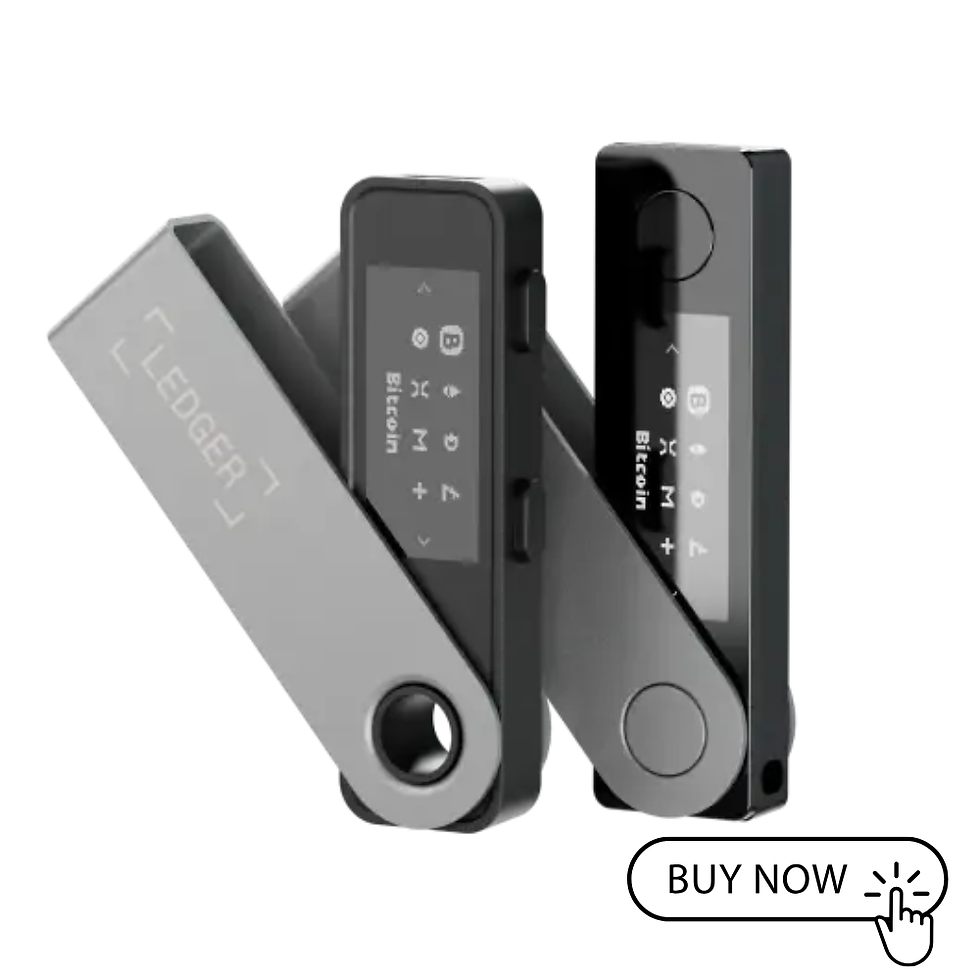
Ledger Nano S Plus is a straightforward choice for users who mainly want secure self-custody without paying for premium display features.
Got a Ledger Letter in the Mail? 9 Tell-Tale Signs It’s a Crypto Scam: Whichever device you choose, one principle never changes. A genuine hardware wallet cannot protect you if you voluntarily give a scammer your recovery phrase.
Never let an unexpected letter, QR code, website or message persuade you to reveal your recovery phrase or approve something you don't understand.
Transaction Check itself can add another layer of protection. Ledger describes it as working alongside Clear Signing, with Transaction Check assessing potential risks while Clear Signing helps users understand what they're actually signing.
But no security feature replaces human judgement.
One Letter, One Simple Lesson
Is This Ledger Transaction Check Letter a Scam? 9 Red Flags That Give It Away:This scam is convincing precisely because it isn't filled with obvious nonsense.
It mentions a real Ledger feature. It uses the correct terminology. It looks professional. It invokes Ledger's CTO. It talks about security. It even tells you that the supposed change is designed to protect your crypto.
Then it asks you to scan a QR code. That's the moment everything should stop.
The best defence against increasingly sophisticated crypto scams isn't learning what every fake letter looks like.
It's developing a habit:
Unexpected request. Stop. Verify independently. Never surrender your recovery phrase.
Because the next scam may look completely different from this one, but it's likely to depend on the same thing.
Getting you to trust the message before you question the action.


Comments