
Coinbase Outage Shows Why Crypto Users Are Moving to Cold Wallets

Updated: May 15
This content includes affiliate links for Ledger products. If you purchase through these links, we earn a commission at no extra cost to you. This is not financial advice. Cryptocurrency assets carry high risks, including the risk of losing your entire investment. Please do your own research and make decisions based on your personal risk tolerance.
When Coinbase suddenly went down during a major AWS outage in May 2026, crypto users around the world were reminded of something uncomfortable:
Even the biggest crypto platforms can fail unexpectedly.
For several hours, users struggled with:
failed trades
login problems
delayed transactions
degraded exchange performance
The outage was linked to overheating and cooling issues at an Amazon Web Services data center in Northern Virginia. Because Coinbase relies heavily on AWS infrastructure, parts of the exchange became unstable.
To make things worse, the outage happened on the same day Coinbase announced weak Q1 earnings, including:
a $394 million net loss
falling revenue
a 14% workforce reduction
a stronger push toward becoming an “AI-native” company
For many crypto holders, this raised a bigger question:
What happens if your exchange suddenly becomes unavailable when you need it most?
That’s exactly why more people are learning about cold wallets.
Why exchange outages matter
Many people treat exchanges like banks. They buy Bitcoin or Ethereum on Coinbase and simply leave everything there. It feels convenient. But exchange outages reveal a hidden problem: you do not fully control your access.
Even if the blockchain itself is working perfectly, you may still lose access temporarily because:
servers fail
cloud systems go offline
traffic spikes overload platforms
maintenance issues happen
That’s what makes self-custody so important in crypto.
What is a cold wallet?
A cold wallet stores your crypto keys offline. Unlike exchange accounts or browser wallets, your private keys are not constantly exposed to the internet.
That greatly reduces risks from:
malware
phishing
exchange failures
browser exploits
online attacks
Cold wallets are often called hardware wallets because they are physical devices you hold yourself.
One of the best known brands is Ledger.
Why many crypto users trust Ledger
Ledger devices are designed to keep your private keys isolated from your computer and phone.
That means:
your keys stay inside the device
transactions require physical approval
malware cannot easily steal your crypto
Even if your computer gets infected, the hardware wallet creates an extra layer of protection.
That’s a huge difference compared to hot wallets.
The Coinbase outage changed how people think
The Coinbase incident was not a hack. Customer funds remained safe, according to Coinbase. But the event still exposed an uncomfortable truth:
Crypto exchanges depend heavily on centralized infrastructure.
Many users believed crypto was fully decentralized. But platforms themselves often rely on:
AWS
cloud servers
centralized databases
large-scale data centers
So when infrastructure fails, access can disappear temporarily. Cold wallets help reduce that dependency.
How a Ledger wallet helps during outages
If your crypto is sitting entirely on an exchange:
you depend on that exchange’s uptime
you depend on their systems
you depend on their cloud infrastructure
But if your crypto is stored on a Ledger device:
you still control your assets
your keys remain offline
your holdings are not tied to exchange availability
The blockchain still exists even if the exchange has problems. That’s the key difference.
How Ledger wallets actually work
This part confuses many beginners. Your crypto is not physically stored inside the wallet.
Instead, the Ledger device stores the private keys that control your crypto on the blockchain.
When you send crypto:
Your computer prepares the transaction
The Ledger device checks the details
You physically approve the transaction
The device signs it internally
Your private keys never leave the device. That’s why cold wallets are much harder to compromise.
The biggest mistake users still make
A cold wallet is powerful, but it cannot protect you from giving away your recovery phrase. This is important. Recent fake wallet scams showed users losing millions after entering seed phrases into malicious apps. Your recovery phrase is the master key to your wallet. Whoever has it controls your funds.
So even with a Ledger device:
never type your seed phrase into random apps
never store it in screenshots
never upload it online
never share it with anyone
The hardware wallet helps, but your habits matter too.
Comparing popular Ledger models
Ledger now offers several models depending on your needs and budget.
Ledger Stax
The premium model.
The Ledger Stax focuses heavily on user experience:
curved E Ink touchscreen
larger display
easier transaction review
modern design feel
It’s built for people who want a more polished experience while managing crypto regularly. Many users like it because verifying addresses and transaction details feels clearer on the larger screen.

Ledger Flex
The portable modern option.
Ledger Flex balances:
portability
touchscreen usability
convenience
It is designed for users who want modern hardware wallet security without carrying a bulky device.
Good for:
mobile crypto users
active holders
people wanting easier navigation

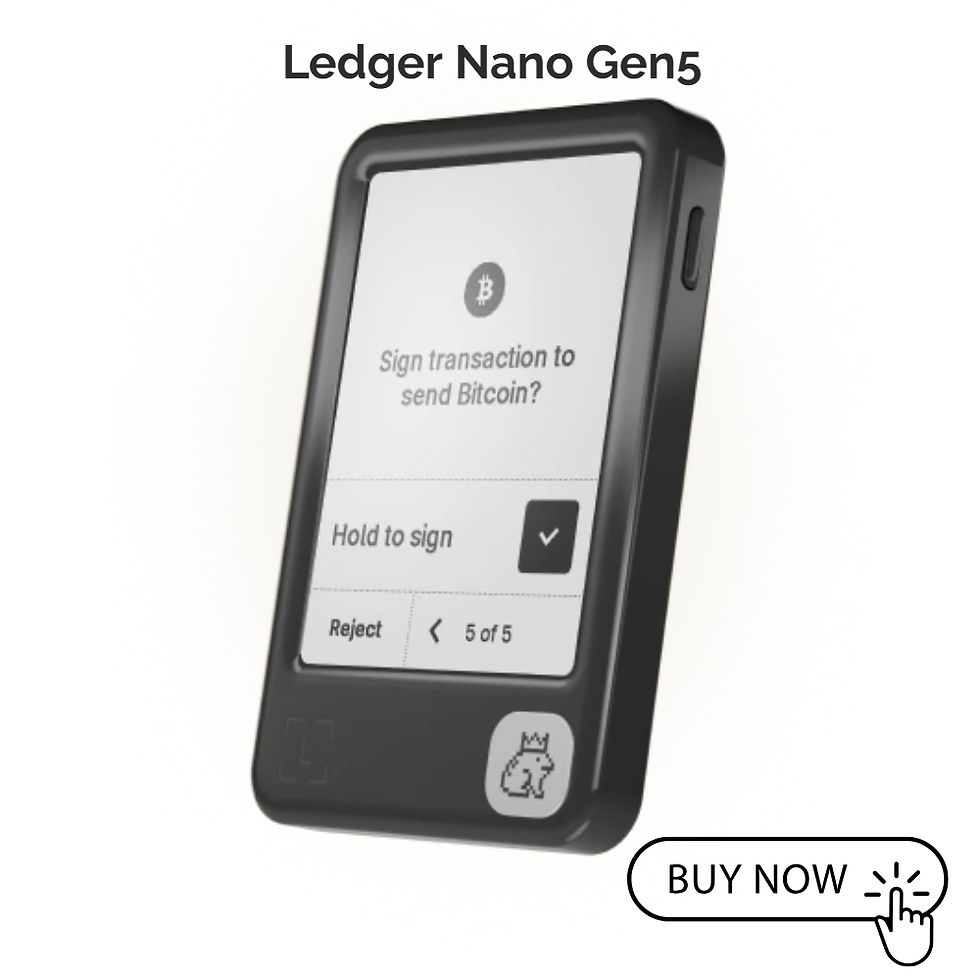
Ledger Nano Gen5
The newer generation approach.
Ledger Nano Gen5 devices focus on:
improved security architecture
future-ready design
smoother onboarding
Many users see the Gen5 direction as Ledger preparing for the next phase of crypto adoption, especially as:
stablecoins grow
AI agents begin transacting
onchain payments become more common
Ledger Nano X
One of the most popular Ledger wallets.
The Nano X became well known because it added:
Bluetooth support
mobile compatibility
larger app storage
It works well for users managing multiple cryptocurrencies while traveling or using smartphones often.

Ledger Nano S Plus
The beginner-friendly option. The Nano S Plus is popular because it offers strong security at a lower cost.
It’s often recommended for:
new crypto users
long-term holders
people wanting basic cold storage
Simple, compact, and reliable.
Why more people are choosing self-custody
The Coinbase outage is part of a larger trend.
Crypto users are realizing that:
exchanges can fail
apps can go down
centralized systems still have weak points
Cold wallets give users more independence. That doesn’t mean exchanges are useless.
Exchanges are still excellent for:
buying crypto
selling crypto
trading
converting assets
But many experienced holders move long-term savings into cold storage afterward.
The psychology of owning a cold wallet
Something changes when you start using self-custody. You stop thinking: “My crypto is inside an app.” And you start understanding: “I actually control these assets.” That mindset shift is important. Because crypto was originally built around ownership and personal control.
Cold wallets help bring users closer to that idea.
The Coinbase outage showed how fragile parts of modern crypto infrastructure still are.
One AWS cooling issue disrupted access for users around the world. That does not mean Coinbase is unsafe. But it does remind people that exchanges are still centralized platforms sitting on top of decentralized blockchains. Cold wallets like Ledger devices help reduce that dependency.
They give users:
stronger control
offline security
protection from many common online threats
peace of mind during outages and market chaos
And in crypto, peace of mind matters more than most people realize.


Comments